Careers
Part of Keyword research, minus the hype in 2027
Keyword research tools compared on source, freshness, and export limits
Keyword research tools in 2027 should be compared by source, unit, market, freshness, coverage, limits, exports, API, security, cost, workflow, and decision value.
What to take away
- No keyword tool measures demand. Each reports one source type: first-party queries, clickstream panels, modeled estimates, or forecast data.
- Export caps bind before accuracy does. Search Console caps at 1,000 rows in the web interface and 25,000 per API request.
- Ahrefs plan caps run from 50,000 to 1,000,000 rows a month, so size the job before the subscription.
- Prices stay out of the table on purpose. Seats, usage and API tiers move, so check the vendor page before you commit.
Source types and what they measure
First-party data counts queries that reached your own site. Search Console and Bing Webmaster Tools report clicks, impressions and average position for verified properties only. That makes them the cleanest source for demand you already capture.
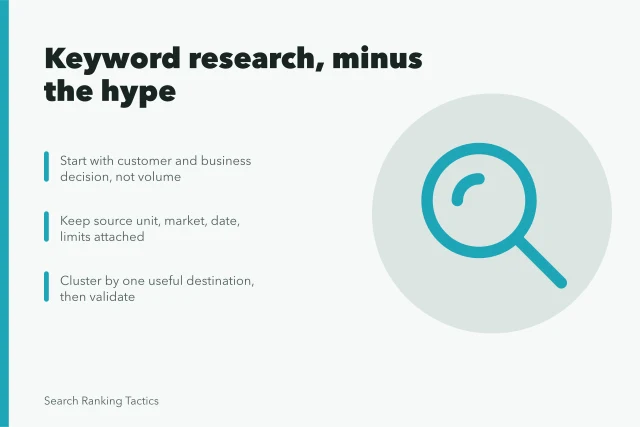
Clickstream and panel products estimate terms you do not own. Ahrefs, Semrush and Similarweb build these from browsing panels, SERP scrapes and partnerships. For a fuller account of what those volumes can and cannot support, keyword research minus the hype is a fair starting point.
Forecast and normalized sources sit further from measurement. Keyword Planner projects from Google Ads history. Google Trends reports relative interest on an index, not a query count.
A volume figure means nothing until you know its unit: searches, clicks, impressions, or a modeled estimate.
Tool choice by decision type
- Own-site demand and content gapsSearch Console plus Bing Webmaster Tools, both free once the property is verified.
- Paid forecastsGoogle Ads Keyword Planner, using the location, language and network settings you will actually buy on.
- Competitor keyword setsAhrefs Keywords Explorer or Semrush Keyword Toolkit, both clickstream-backed.
- Market size for sites you do not ownSimilarweb, read as modeled rather than measured.
- Question and topic discoveryAlsoAsked and AnswerThePublic, collected on demand against the live SERP.
- Clustering at volumeKeyword Insights on imported lists, or DataForSEO for raw API calls.
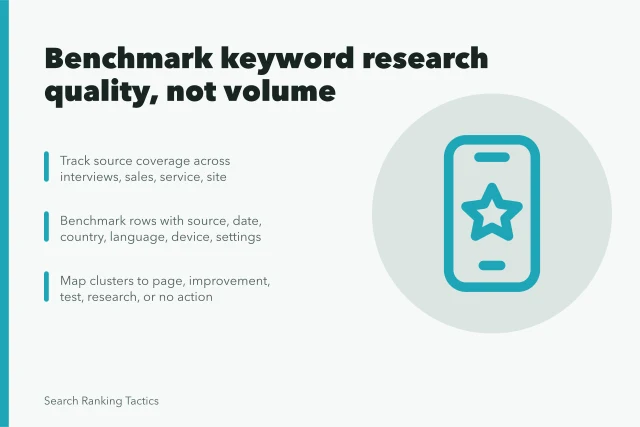
Most teams need two or three of these, not twelve. If your decision is about coverage rather than features, scoring a keyword research benchmark sets out the cluster and demand checks.
Side-by-side comparison: source, freshness, export caps
Decision rule: read the row that matches your decision, then check the export cap against the size of the job.
Side-by-side comparison
Source type
- Google Search Console
- First-party observed queries from verified sites
- Google Trends
- Normalized relative interest from search samples
- Google Ads Keyword Planner
- Ads history plus paid forecasts
- Bing Webmaster Tools
- First-party owned-site data from Bing
- Ahrefs Keywords Explorer
- Clickstream, SERP and third-party data
- Semrush Keyword Toolkit
- Proprietary database with clickstream and Ads data
- Moz Keyword Explorer
- Proprietary Moz metrics and ranges
- Similarweb
- Modeled traffic intelligence from panels and partnerships
- DataForSEO
- API endpoints for Ads, Bing, clickstream and SERP
- AlsoAsked
- Questions from SERPs and People Also Ask
- AnswerThePublic
- Suggestions and questions from Google and Bing
- Keyword Insights
- Imported lists plus SERP data for clustering
Freshness
- Google Search Console
- 2 to 3 days; API keeps 16 months
- Google Trends
- Refreshes often; history revised
- Google Ads Keyword Planner
- Historical monthly; forecasts on request
- Bing Webmaster Tools
- Daily; API exposes 6 months
- Ahrefs Keywords Explorer
- Volumes monthly; SERP snapshots more often
- Semrush Keyword Toolkit
- Volumes monthly; ranks and SERP features more often
- Moz Keyword Explorer
- Volumes monthly; authority metrics often
- Similarweb
- Most market data monthly; some panels weekly
- DataForSEO
- Live endpoints current; task endpoints queued
- AlsoAsked
- Runs on demand against the live SERP
- AnswerThePublic
- Generated on demand
- Keyword Insights
- On demand; depends on import and SERP
Documented export cap
- Google Search Console
- 1,000 rows in the web interface; 25,000 per API request
- Google Trends
- CSV for timeline, region and related queries; no public API
- Google Ads Keyword Planner
- CSV or Sheets; Ads API for larger pulls
- Bing Webmaster Tools
- CSV; API for larger pulls
- Ahrefs Keywords Explorer
- 50,000 to 1,000,000 rows a month by plan
- Semrush Keyword Toolkit
- CSV, XLSX and Sheets from the interface
- Moz Keyword Explorer
- CSV export of saved lists
- Similarweb
- Excel and CSV downloads
- DataForSEO
- No fixed row cap; priced per request or task
- AlsoAsked
- Free plan caps searches; paid plans export CSV and images
- AnswerThePublic
- Free daily search cap; paid CSV and PDF
- Keyword Insights
- Row processing metered by plan credits; CSV export
Example: tracing one keyword across three sources
Take a US retailer checking a mid-tail service term. Search Console shows impressions and average position for pages it already owns. Ahrefs returns a clickstream volume and a difficulty score. Keyword Planner returns an Ads-based range.
The three figures will not agree, and none of them counts demand. Record country, date and unit on every row before you merge anything into a forecast.
Procurement and lock-in checks
Shortlist with a SEO tools and software review before you run any of these checks, because the vendor list decides what you can test.
- Run one bounded job in every shortlisted tool before you buy.
- Trace a single value back to its method and unit.
- Export a real file and open it in the spreadsheet your team uses.
- Test roles, retention, and what you keep when the contract ends.
- Price the review hours alongside the subscription.
The GOV.UK guidance on choosing technology sets out adaptable choices, data control, security review and ownership-cost analysis. Those questions transfer to a keyword subscription.
The GOV.UK open standards guidance links open formats to interoperability and less supplier dependence.
Canada note: if your panels or analytics touch Canadian visitors, PIPEDA sets the consent framework, and the OPC states what the Act requires. US readers can file that as a second-market check.
Cost and why prices are excluded
Vendor pricing moves with seats, usage, currency and API tiers. A comparison page that lags the pricing page misleads more than it informs, so this one names the axis and leaves the figures to the vendor.
Two numbers settle most purchases. One is the entry tier. The other is the API or add-on tier you need once export volume grows.
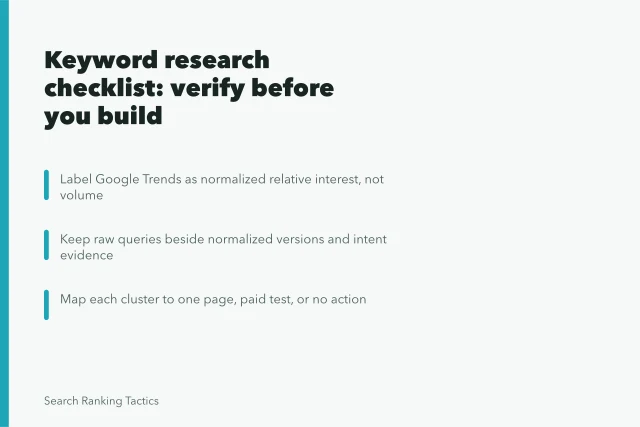
Before you sign, a keyword research checklist keeps source, market, date and unit attached to every exported row.